Basics Of DDoS Mitigation Services Your Way To Success
DDoS mitigation services can help protect your network from DDOS attacks. These services protect individual IP addresses from attacks via IP masking or Scrubbing. They also provide cloud-based security for individual IPs. In this article, we'll look at the advantages of using a mitigation service. If you are seeking a reliable defense against DDOS attacks, here are a few ideas to think about. Continue reading to find out more.
Layer 7 DDoS attack
DDoS mitigation services for layer 7 attacks can help reduce the impact of such attacks. These attacks are particularly risky due to their sheer quantity and difficulty in separating human traffic from bots. It is extremely difficult to defend layer 7 DDoS attacks effectively, as their attack signatures constantly changing. These kinds of attacks can be avoided by proactive monitoring and advanced alerting. This article will explain the fundamentals of Layer 7 DDoS mitigation.
A layer 7 DDoS mitigation service can block these attacks by using the «lite» mode. The «Lite» mode is the static equivalent of dynamic web content. This can be used to create an appearance of accessibility in emergency situations. «Lite» mode is also especially effective against application layer DDoS as it limits slow connections per CPU core and over the limit of the allowable body. In addition to these methods, a layer 7 mitigation service can also shield against more sophisticated attacks, like DDOS attacks.
DDoS mitigation services for layer 7 attacks employ pattern identification. Attackers generate traffic, and then transmit it to a website. While it may seem harmless however, it is essential to differentiate the legitimate users from those who are being targeted. To achieve this, the mitigator must create an identity based on repeated patterns. These signatures can be created in a way that is automated by certain mitigators. Automated mitigation services reduce time by automating the process. The mitigation service should be able to detect layer 7 DDoS attacks by looking at the headers of HTTP requests. The headers are well-formed, and each field is a fixed range of values.
Layer 7 DDoS mitigation services play significant roles in the defense process. Due to the difficulty in attacking at this level, it's harder to prevent and reduce the effects. Your HTTP-based layer 7 resources are protected against other attack vectors by using the Web Application Firewall service (WAF). And you'll have peace of confidence knowing that your site is safe. It's crucial to have an application firewall service in order to defend against layer 7 DDoS attacks.
Scrubbing deters DDoS attacks
Scrubbing is your first line of defense against DDoS attacks. Scrubbing services filter through the incoming traffic and Product Of The Day pass only the good stuff on to your application. Scrubbing can help prevent DDoS attacks by keeping malicious traffic from getting to your application. Scrubbing centers have special equipment capable of handling hundreds of gigabits of network traffic per second. Scrubbing centers are locations with multiple scrubbing servers. One of the biggest issues with scrubbing is determining which traffic is legitimate and which ones are DDoS attacks.
Physical devices are referred to appliances and are typically kept apart from other mitigation efforts. They are extremely effective in securing small companies or companies from DDoS attacks. These devices block traffic in a Datacentre and forward only clean traffic to the destination. Most DDoS Scrubbing providers have between three and seven scrubbing centers around the world, consisting of DDoS mitigation equipment. Customers can turn them on by pressing an icon.
Unfortunately, traditional DDoS mitigation solutions have flaws. They are generally good for traditional web traffic, however they aren't suited to real-time games and apps. Many companies are turning to scrubbing centers to decrease the threat of DDoS attacks. Scrubbing servers' advantages include the fact that they are able to redirect harmful traffic and ward off DDoS attacks in real-time.
Scrubbing helps to prevent DDoS attacks by redirecting traffic to scrubbing centers, it could result in a slowdown. These attacks can cause critical services like internet access to be unavailable. It is crucial to ensure that everyone is on the same page. While increasing bandwidth can help reduce traffic congestion however it is not enough to stop all DDoS attacks. Volumetric DDoS attacks are growing. In December 2018 the size of a single DDoS attack surpassed one Tbps. A couple of days later, another one exceeded two Tbps.
IP masking prevents direct-to-IP DDoS attacks
IP masking is the best way to safeguard your website from DDoS attacks. DDoS attacks that direct-to-IP are designed to overwhelm devices that can't resist the pressure. The cyber attacker assumes control of the infected device and installs malicious software. Once the device has been infected, it sends instructions to a botnet. Bots send requests to the IP address for the server targeted. The bots generate traffic that is normal and cannot be distinguished from legitimate traffic.
The second method is to use BOTs to start a session that is not detected. The attack's BOT count is equivalent to the IP addresses that originated. These BOTs are able to take advantage of this DDoS security loophole with just the presence of a few rogue BOTs. The attacker could use only some of these bots to launch attacks that are not detected. This is not a risk because they use real IP addresses. When the attacks are launched, BOTs are able to identify the IP addresses of legitimate clients and servers without revealing the IP addresses of malicious IPs.
IP Spoofing is another technique employed by attackers to launch DDoS attacks. IP Spoofing is a technique which conceals the origin of IP packets through changing packet header IP addresses. This way the destination computer is able to accept packets that come from an established source. However, if the attacker employs a spoofing technique, the destination computer will only accept packets that come from an IP address that is known to be trusted.
Individual IPs are secured by cloud-based DDoS mitigation strategies
In contrast to traditional DDoS defense, cloud-based DDoS mitigation is carried out on a separate network. It is able to detect and limit DDoS threats before they reach your services. Typically, this solution relies on a domain name system that can route inbound traffic through an scrubbing facility, which is able to be used in conjunction with a dedicated network. Large deployments utilize routing to filter all network traffic.
DDoS security methods that were employed in the past are no longer effective. The latest DDoS attacks are much bigger and more advanced than ever. Traditional on-premises solutions aren't able to keep up with. Cloud DDoS mitigation solutions leverage the cloud's distributed nature to provide unbeatable protection. These six aspects of cloud-based DDoS mitigation strategies will help you determine which is right for your company.
Arbor Cloud's advanced automation capabilities enable it to detect and respond to attacks within 60 seconds. The solution also includes content caching and application firewall protection, which can significantly boost performance. The Arbor Cloud is supported by NETSCOUT's 24/7 ASERT team comprising super remediators. It can also initiate mitigation within 60 seconds of detection of an attack, Product of the Day which makes it a very effective and always-on DDoS mitigation solution that works with all kinds of internet infrastructure.
Arbor Cloud is a fully-managed hybrid defense that blends on-premise DDoS protection with cloud-based traffic scrubbing services. Arbor Cloud has fourteen global Scrubbing centers, and 11 Tbps of network mitigation capacity. Arbor Cloud can protect both IPv4 as well as IPv6 networks. It is also able to stop DDoS attacks using mobile apps. Arbor Cloud is a fully managed DDoS protection solution that is a combination of on-premise AED DDoS defense with cloud-based, global traffic scrubbing services.
Cost of implementing a DDoS mitigation strategy
The cost of a DDoS mitigation solution is variable and depends on a variety of factors, including the type of service, the size of the internet pipe and application design frequency of attacks. Even a small-sized business could easily end up spending thousands of dollars per month on DDoS protection. If you take proactive steps towards protecting your website from DDoS attacks, it will be well worth the investment. Read on to find out more.
A DDoS mitigation solution's forwarding rate refers to its ability to process data packets measured in millions of packets per second. Attacks can go up to 300-500 Gbps. They also be scaled up to 1 Tbps. So, an anti-DDoS mitigation solution's processing power must be greater than the attack's bandwidth. The method used to detect the attack is another factor that can influence the speed Product of The Day mitigation. Preemptive detection is expected to provide immediate mitigation. It is important to test this in real-world conditions.
Link11's cloud-based DDoS protection system detects DDoS attacks on web and infrastructure and reduces them at levels three through seven in real time. The software utilizes artificial intelligence to detect attacks, analysing patterns of attack that are known and comparing them with current usage. This smart platform can send you an SMS notification, so you can easily respond to any attack. Link11's DDoS protection system is completely automated, and is able to work 24/7.
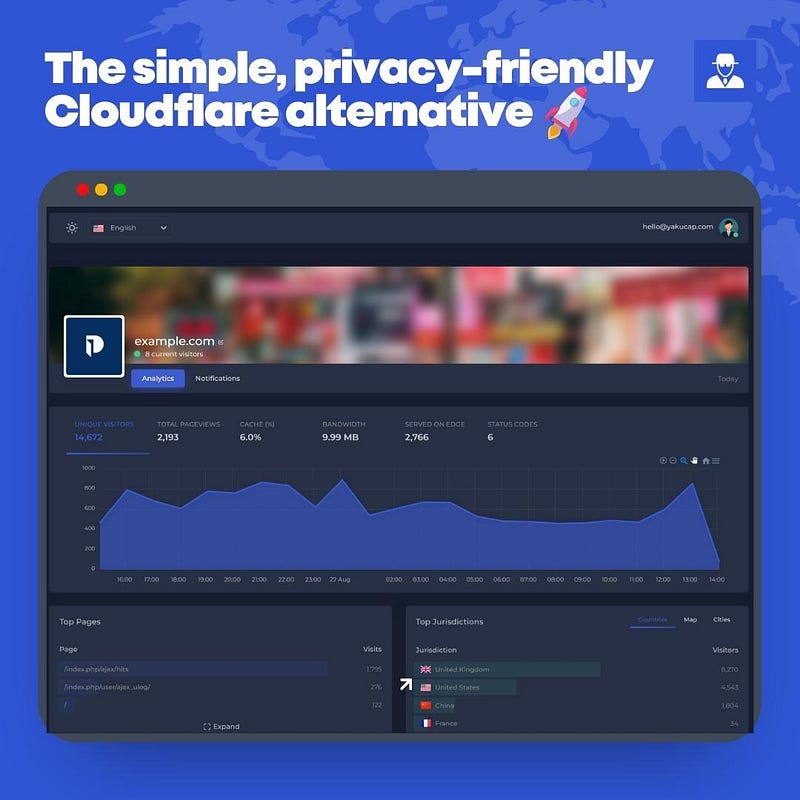 The Akamai Intelligent Platform handles up to 15-30 percent of the world's online traffic. Its resilience and scalability help businesses in battling DDoS attacks. The Kona DDoS Defender, for instance, can detect and limit DDoS attacks at the application layer by using APIs. It is supported by a zero second SLA. The Kona DDoS Defender protects core applications from being compromised.
Layer 7 DDoS attack
DDoS mitigation services for layer 7 attacks can help reduce the impact of such attacks. These attacks are particularly risky due to their sheer quantity and difficulty in separating human traffic from bots. It is extremely difficult to defend layer 7 DDoS attacks effectively, as their attack signatures constantly changing. These kinds of attacks can be avoided by proactive monitoring and advanced alerting. This article will explain the fundamentals of Layer 7 DDoS mitigation.
A layer 7 DDoS mitigation service can block these attacks by using the «lite» mode. The «Lite» mode is the static equivalent of dynamic web content. This can be used to create an appearance of accessibility in emergency situations. «Lite» mode is also especially effective against application layer DDoS as it limits slow connections per CPU core and over the limit of the allowable body. In addition to these methods, a layer 7 mitigation service can also shield against more sophisticated attacks, like DDOS attacks.
DDoS mitigation services for layer 7 attacks employ pattern identification. Attackers generate traffic, and then transmit it to a website. While it may seem harmless however, it is essential to differentiate the legitimate users from those who are being targeted. To achieve this, the mitigator must create an identity based on repeated patterns. These signatures can be created in a way that is automated by certain mitigators. Automated mitigation services reduce time by automating the process. The mitigation service should be able to detect layer 7 DDoS attacks by looking at the headers of HTTP requests. The headers are well-formed, and each field is a fixed range of values.
Layer 7 DDoS mitigation services play significant roles in the defense process. Due to the difficulty in attacking at this level, it's harder to prevent and reduce the effects. Your HTTP-based layer 7 resources are protected against other attack vectors by using the Web Application Firewall service (WAF). And you'll have peace of confidence knowing that your site is safe. It's crucial to have an application firewall service in order to defend against layer 7 DDoS attacks.
Scrubbing deters DDoS attacks
Scrubbing is your first line of defense against DDoS attacks. Scrubbing services filter through the incoming traffic and Product Of The Day pass only the good stuff on to your application. Scrubbing can help prevent DDoS attacks by keeping malicious traffic from getting to your application. Scrubbing centers have special equipment capable of handling hundreds of gigabits of network traffic per second. Scrubbing centers are locations with multiple scrubbing servers. One of the biggest issues with scrubbing is determining which traffic is legitimate and which ones are DDoS attacks.
Physical devices are referred to appliances and are typically kept apart from other mitigation efforts. They are extremely effective in securing small companies or companies from DDoS attacks. These devices block traffic in a Datacentre and forward only clean traffic to the destination. Most DDoS Scrubbing providers have between three and seven scrubbing centers around the world, consisting of DDoS mitigation equipment. Customers can turn them on by pressing an icon.
Unfortunately, traditional DDoS mitigation solutions have flaws. They are generally good for traditional web traffic, however they aren't suited to real-time games and apps. Many companies are turning to scrubbing centers to decrease the threat of DDoS attacks. Scrubbing servers' advantages include the fact that they are able to redirect harmful traffic and ward off DDoS attacks in real-time.
Scrubbing helps to prevent DDoS attacks by redirecting traffic to scrubbing centers, it could result in a slowdown. These attacks can cause critical services like internet access to be unavailable. It is crucial to ensure that everyone is on the same page. While increasing bandwidth can help reduce traffic congestion however it is not enough to stop all DDoS attacks. Volumetric DDoS attacks are growing. In December 2018 the size of a single DDoS attack surpassed one Tbps. A couple of days later, another one exceeded two Tbps.
IP masking prevents direct-to-IP DDoS attacks
IP masking is the best way to safeguard your website from DDoS attacks. DDoS attacks that direct-to-IP are designed to overwhelm devices that can't resist the pressure. The cyber attacker assumes control of the infected device and installs malicious software. Once the device has been infected, it sends instructions to a botnet. Bots send requests to the IP address for the server targeted. The bots generate traffic that is normal and cannot be distinguished from legitimate traffic.
The second method is to use BOTs to start a session that is not detected. The attack's BOT count is equivalent to the IP addresses that originated. These BOTs are able to take advantage of this DDoS security loophole with just the presence of a few rogue BOTs. The attacker could use only some of these bots to launch attacks that are not detected. This is not a risk because they use real IP addresses. When the attacks are launched, BOTs are able to identify the IP addresses of legitimate clients and servers without revealing the IP addresses of malicious IPs.
IP Spoofing is another technique employed by attackers to launch DDoS attacks. IP Spoofing is a technique which conceals the origin of IP packets through changing packet header IP addresses. This way the destination computer is able to accept packets that come from an established source. However, if the attacker employs a spoofing technique, the destination computer will only accept packets that come from an IP address that is known to be trusted.
Individual IPs are secured by cloud-based DDoS mitigation strategies
In contrast to traditional DDoS defense, cloud-based DDoS mitigation is carried out on a separate network. It is able to detect and limit DDoS threats before they reach your services. Typically, this solution relies on a domain name system that can route inbound traffic through an scrubbing facility, which is able to be used in conjunction with a dedicated network. Large deployments utilize routing to filter all network traffic.
DDoS security methods that were employed in the past are no longer effective. The latest DDoS attacks are much bigger and more advanced than ever. Traditional on-premises solutions aren't able to keep up with. Cloud DDoS mitigation solutions leverage the cloud's distributed nature to provide unbeatable protection. These six aspects of cloud-based DDoS mitigation strategies will help you determine which is right for your company.
Arbor Cloud's advanced automation capabilities enable it to detect and respond to attacks within 60 seconds. The solution also includes content caching and application firewall protection, which can significantly boost performance. The Arbor Cloud is supported by NETSCOUT's 24/7 ASERT team comprising super remediators. It can also initiate mitigation within 60 seconds of detection of an attack, Product of the Day which makes it a very effective and always-on DDoS mitigation solution that works with all kinds of internet infrastructure.
Arbor Cloud is a fully-managed hybrid defense that blends on-premise DDoS protection with cloud-based traffic scrubbing services. Arbor Cloud has fourteen global Scrubbing centers, and 11 Tbps of network mitigation capacity. Arbor Cloud can protect both IPv4 as well as IPv6 networks. It is also able to stop DDoS attacks using mobile apps. Arbor Cloud is a fully managed DDoS protection solution that is a combination of on-premise AED DDoS defense with cloud-based, global traffic scrubbing services.
Cost of implementing a DDoS mitigation strategy
The cost of a DDoS mitigation solution is variable and depends on a variety of factors, including the type of service, the size of the internet pipe and application design frequency of attacks. Even a small-sized business could easily end up spending thousands of dollars per month on DDoS protection. If you take proactive steps towards protecting your website from DDoS attacks, it will be well worth the investment. Read on to find out more.
A DDoS mitigation solution's forwarding rate refers to its ability to process data packets measured in millions of packets per second. Attacks can go up to 300-500 Gbps. They also be scaled up to 1 Tbps. So, an anti-DDoS mitigation solution's processing power must be greater than the attack's bandwidth. The method used to detect the attack is another factor that can influence the speed Product of The Day mitigation. Preemptive detection is expected to provide immediate mitigation. It is important to test this in real-world conditions.
Link11's cloud-based DDoS protection system detects DDoS attacks on web and infrastructure and reduces them at levels three through seven in real time. The software utilizes artificial intelligence to detect attacks, analysing patterns of attack that are known and comparing them with current usage. This smart platform can send you an SMS notification, so you can easily respond to any attack. Link11's DDoS protection system is completely automated, and is able to work 24/7.
The Akamai Intelligent Platform handles up to 15-30 percent of the world's online traffic. Its resilience and scalability help businesses in battling DDoS attacks. The Kona DDoS Defender, for instance, can detect and limit DDoS attacks at the application layer by using APIs. It is supported by a zero second SLA. The Kona DDoS Defender protects core applications from being compromised.